Bismillahi Rahmani Rahim
If they played this at the club, stopped serving alcohol, opened in the daytime and allowed children, I might go back.
BUST THIS!
(But I would only dance with Muslims!)
Bismillahi Rahmani Rahim
If they played this at the club, stopped serving alcohol, opened in the daytime and allowed children, I might go back.
BUST THIS!
(But I would only dance with Muslims!)
Bismillahi Rahmani Rahim
In the Name of Allah,
The Beneficent, The Merciful
As-Salaamu ‘Alaikum Beloved and Beautiful Sisters!
The total area of the land and water of the planet Earth is 196,940,000 square miles.
The circumference of the planet Earth is 24,896 miles.
The diameter of the Earth is 7,926 miles.
These are the first three Actual Facts that ALL of our children should know about our (Black People’s) Earth.
Personally, I hated geography in school because I couldn’t relate to it. I didn’t care anything about the United States or Europe – the only places on Earth they thought were significant and tried to force down my throat. Not surprisingly, there was very little taught about Africa, and the teachings about The Middle East were made to seem as though it was disconnected from the history of the Blackman, woman and child.
But All Praise is Due to Allah, Master Fard Muhammad, to Whom Praise is Due Forever, Who Has Come and Revealed THE TRUTH that THE WHOLE EARTH BELONGS TO THE BLACK PEOPLE.
We Are the Owners of the Earth, Sisters. Our Fathers Created It For Us. We Should Know Its Dimensions, Topography and Demographics. We should know the locations of the different countries and continents that make up our planet.
This is a FREE game your children can play online which makes learning GEOGRAPHY a little less boring and if you teach them that it all belongs to them, will make it fascinating. Encourage your children to travel when they become adults and see their Earth and if you are able, take them on trips wherever in the world you can. Obtain Passports And Get To Know Your Planet.
The Whole Universe Is Subordinate To The Planet Earth, Because This Is The Planet That The God of the Universe (Allah) Was Made On and Lives On. The Earth is the Mastermind of All the Planets and is Where The Blackman (The God of the Universe) Resides.

Bismillah
It is because they can’t help themselves.
And we’re stuck here
Unable to get away from them.
They seek us out
“Let’s go kill some niggers.” They say.
Then they come to the Black neighborhood
And chase a poor Black man onto the highway
Where he is run down and killed.
Or they trick a Black man into their car
As if they are his friends
And then attempt to hang him.
AND
WE
Just get angry and hold candlelight vigils
AND
Ask the same murderers’ brothers for justice
AND
Receive none.
Have you ever wondered about our peculiar situation?
Where else in the world
Are there so many Black people living among whites
WHO
Have such a history?
They brought us here as slaves,
Reluctantly “freed” us,
BUT
Didn’t give us anything to go for ourselves.
We are still here.
And they are still killing us,
As if we did something wrong to them.
THEY BROUGHT US HERE!
We didn’t ask to come.
Now, they don’t have anything for us to do.
They don’t even have enough jobs for their own people.
Why don’t they give us a place
Where We Can Do For Ourselves,
Without Having To Live Under Their Shadow Of Death?
Bismillah

AS-SALAAMU ‘ALAIKUM BELOVED BLACK SISTERS!
Our Beloved Messenger, The Most Honorable Elijah Muhammad (May the Peace and the Blessings of Allah Forever Be Upon Him) Gave Us The Wisdom of Gods – Wisdom that will return us to our former state. As wives and mothers, we must use wisdom in relating to our husband and children, as well as to our Brothers and Sisters. In fact, this wisdom can be used in dealing with any and every one we meet.
This book was written for the Laborers in The Nation of Islam, so it is Supreme Wisdom from The Last and Greatest Messenger of Allah (PBUH). We should read it and apply it to our everyday lives.
THE PROPER HANDLING OF PEOPLE
LEADERSHIP QUALITIES
~~~~~~~~~~~~~~~~~~~~~~~~~~~~~~~~~~~~~~~~~~~~~~~~~~~~~~~~~~~~
CONTRASTS IN LEADERSHIP
|
CRISIS LEADERSHIP |
CONSTRUCTIVE LEADERSHIP |
|
Dependence on leader |
Individual responsibility |
|
Acceptance of leader’s ideas |
Chance to develop own ideas |
|
Loyalty to leader |
Group feeling |
|
Discipline as incentive |
Job satisfaction as incentive |
|
Orders |
Consultation |
|
Objective: obedience |
Objective: cooperation |
~~~~~~~~~~~~~~~~~~~~~~~~~~~~~~~~~~~~~~~~~~~~~~~~~~~~~~~~~~~~
ROAD TO CONSTRUCTIVE LEADERSHIP
Respect the personal integrity of the people you lead. Each person is a worth-while individual in his own right. The fact that one person is homelier, or less able than another, doesn’t make him less of a person.
Help your people develop their latent abilities. Everyone has a greater potentiality than he ever realizes. It’s a matter of degree, of course, but by encouraging your people to further education, training, and so on, you increase not only their satisfaction, but their accomplishment as well. This covers both their in-Mosque activities and outside interests.
Help them advance in the Mosque. You accomplish this not only by your own training efforts, but by setting up objectives for their efforts. When you tell a brother: “Brother John, I feel with a little more study and effort you’ll qualify for the next grade in this classification,” you’re setting up a tempting target he’s not likely to overlook. There’s a double gain. For the believer, it’s improved status. You benefit from having a better equipped believer.
Weld your people into a group. Besides the personal relationship between you and the individual, you strive to create group feeling. [With] This attitude, the individual develops into a group member.
Make it possible for your people to contribute their ideas. By inviting suggestion, by consulting with your people in your over-all planning, you give them the sense of participation that makes the objectives of your Mosque their objective.
TROUBLES OF THE INSECURE LABORER
He passes the buck.
He takes all the credit.
He doesn’t give information to subordinates.
He surrounds himself with favorites or yes-men.
He gets panicky over having to make decisions
TROUBLES OF THE SADISTIC LABORER
He tends to “take it out on his men.”
He likes to “see people eat dirt.”
Picks on individuals.
He’s overquick to punish.
SOME PROBLEM LABORERS
Wishy-washy. Not sure of anything, least of all himself.
He runs the show, and wants everyone to know.
Slave driver. Wages personal war with his people, and has to win.
Out-of-touch. Leaves details and everything else to subordinates.
Palsy-walsy. He thinks, ‘I can get the so-and-sos to work better by means of a little back-slapping.’
Personal problems keep him out of the running.
Knows-it-all. Knows all the answers and nobody else knows any.
On his way up. Has eye on the next rung and his foot on your neck.
Starts running the moment he wakes up, but hasn’t caught up yet.
ARE YOU THE CAUSE OF THE LABORER’S TROUBLE?
Do you like to “show up” your superior?
Do you resent taking orders?
Do you tend to by-pass him?
Do you get emotional in thinking or talking about him?
Do you think you should be in his shoes?
Do you depend on him too much?
Do you dislike him for “personal reasons?”
Do you keep him in the dark as much as possible?
Are you afraid of Him?
THREE VIEW-POINTS OF GRIEVANCES
1. The person involved
2. The Nation
3. The Laborer’s View
The Person Involved’s View
Grievance procedure gives him formal recognition in dealing with his superior. This gives him status, prestige.
It provides him with the means of protecting his rights as an individual on the scene. This tends to act as a guarantee of fair treatment.
He can get a hearing from top laborers. This means he has access to the ultimate authority in the Mosque.
The Nation’s View
Grievances show the friction points of believer-laborer relations. Each case pinpoints an area that bears watching, or treatment.
It’s the safety valve that blows off before personnel pressures have a chance to build to the explosive point. In this way, minor matters remain minor, before emotional irritations can magnify them.
A Mosque’s grievances are a rough measure of supervisory performance. Because it’s so complex, supervisory job performance is difficult to measure. Success in handling grievances is one of the indicators management uses.
The Laborer’s View
A means of Communication. The worker has a formal channel along which to broadcast his viewpoints and his wishes directly to the laborer.
A means of satisfying the believer. He may or may not get what he wants, but at least he had his say.
The laborer can deal with irritations at the time they start. Thus, the grievance procedure becomes a trouble-spotting device.
As it is true of any contact the laborer has with his people, he has a chance of cementing his relationships, getting to know them better, satisfying them further.
STEPS FOR HANDLING GRIEVANCES
ESSENTIALS OF THE EFFECTIVE ORDER
THINGS LABORERS SHOULD BE CONCERNED WITH
A laborer who is efficient, is fair, gives full consideration to complaints, gives clear orders and instructions, considers others’ personal problems, gives subordinates chances to make suggestions and opportunity to use initiative.
THE PROPER HANDLING OF PEOPLE
As Taught by Messenger Elijah Muhammad
Chapter One
I. Fundamental Technique in Handling People
1. Don’t criticize, condemn or complain.
2. Give honest, sincere appreciation.
3. Arouse in the other person an eager want.
II. Ways To Make People Like You
1. Become genuinely interested in other people.
2. Smile.
3. Remember that a man’s name is to him the sweetest and most important sound in any language.
4. Be a good listener. Encourage others to talk about themselves.
5. Make the other person feel important and do it sincerely.
III. Ways To Win People To Your Way of Thinking
1. The only way to get the best of an argument is to avoid it.
2. Show respect for the other man’s opinion. Never tell a man he is wrong.
3. If you are wrong, admit it quickly and emphatically.
4. Begin in a friendly way.
5. Get the other person saying, “Yes, yes” immediately.
6. Let the other man feel that the idea is his.
7. Let the other man do a great deal of talking.
8. Try honestly to see things from the other person’s point of view.
9. Be sympathetic with the other person’s point of view.
10. Appeal to the nobler motives.
11. Dramatize your ideas.
12. Throw down a challenge.
IV. Ways To Change People Without Giving Offense Or Arousing Resentment
1. Begin with praise and honest appreciation.
2. Call attention to people’s mistakes indirectly.
3. Talk about your own mistakes before criticizing the other person.
4. Ask questions instead of giving direct orders.
5. Let the other man save his face.
6. Praise the slightest improvement and praise every improvement. Be hearty in your approbation and lavish in your praise.
7. Give the other person a fine reputation to live up to.
8. Use encouragement. Make the fault seem easy to correct.
9. Make the other person happy about doing the thing you suggest.
Chapter Two
V. Things Important To People
1. People were listed as concerned with the following in order of importance to them:
Security.
Treatment by people in authority over them.
Relationship to associates.
Physical surroundings.
Treatment by their job.
Compensation.
Appreciation of efforts.
Incentives.
Benefits.
Attention given complaints.
Opportunity for advancement.
Opportunity to make suggestions.
VI. Things Laborers Should Be Concerned With:
Job Progress.
How to do job.
Nation’s or Mosque’s plans and results.
Recognition of achievement through:
Advancement.
Credit from good job.
Pleasant relations with people.
Consideration of job is important.
A laborer who is efficient, is fair, gives full consideration to complaints, gives clear orders and instructions, considers others personal problems, gives subordinates chances to make suggestions and opportunity to use initiative.
Chapter 3
VII. People Work Best
1. People work best when they feel that they and their efforts are important. You can make them feel this way if you:
understand that each believer is an individual
find out what they want from their position or Islam
Situations in Dealing With People
2. You put this knowledge to work by the way you deal with each person in such situations as:
correcting mistakes
praising
dealing with personal problems
resolving personal conflicts
getting them to work as a group
handling grievances
giving orders
introducing changes
VIII. Dealing With Authority
They are people too and so are other officials or laborers.
Your success as a person depends on how you get along with them too.
Maintaining good relations with authorities and other officials probably does not differ much from dealing with someone who is not. They are all people. If you can figure out how to handle them, you know it will pay off.
IX. Steps in Handling Personal Problems
Listen without judging or advising.
Help the person to clarify his thinking.
Assist him in carrying out his decision.
If you can’t help, minimize the load
lessen responsibility
create new interests
assure the individual of your sympathy and understanding
emphasize the need to carry on
X. Two Basic Goals
Security
Approval
realize people need approval
how and when depends on the individual and situation
a man wants respect for his ideas and opinions and a chance to excel to show his ability
Chapter 4
XI. Elements of Correction
Be sure it’s necessary.
Correct in private, if possible.
Be matter-of-fact.
Start with a favorable comment, if possible.
Suit the correction to the person corrected.
Tell what’s wrong, and why.
Give him a chance to comment.
Tell how to make the correction.
End on an encouraging note.
XII. Types of Assistant’s Responsibilities
FULL RESPONSIBILITY (No referral to Superior)
SHARED RESPONSIBILITY (Report action to Superior)
NO RESPONSIBILITY (Refer to Superior for decision)
Checking set up before new project begins
Progress records
Matters of discipline
Checking attendance
Quality reports
Assignments
Routine maintenance
Progress of program schedules
Scheduling
Keeping performance charts up to date.
Training of new people
Granting of privileges
Advising setup man of needed changes
Grievance handling
XIII. How to Make Decisions
Define the problem exactly.
Canvass all possibilities.
Compare and evaluate each solution.
Select the best parts of each.
Implement the decision.
XIV. How to Assist Your Assistant
1. Give specific training.
2. Help him establish good relations with group.
prepare group
prepare assistant
define his authority
3. Define his duties:
regular duties
emergency duties
4. Define his responsibility:
full
shared
none
5. Train him to make decisions.
6. Tell him who to see for guidance.
Chapter 5
XV. Road to Satisfaction
Recognition as Individual.
Security.
Sense of Belonging.
Learn person’s name and use it.
Teach him Properly.
Make him feel wanted.
Put him on his own.
Criticize sparingly.
Help him make friends.
Listen to his ideas. Recognize him away from Mosque life.
Praise good work.
Point out his contribution to the group.
Show him his work is important.
Make him feel your Mosque is a team of which he is a respected member.
Make sure orders are understood.
Expect enough from him to provide incentive but not more than he can deliver.
Don’t let any change come as a surprise.
XVI. Four Basic Problems
Health.
Finances.
Domestic Affairs.
Affairs of the Heart.
XVII. Official Agreement
The welfare of the group comes first.
The official shall lead the group and be responsible for its welfare.
The Muslims should follow the official’s lead, obey instructions, directions, orders, etc.
The official shall not take advantage of his position to give harmful orders, play favorites, etc.
The official and believers shall each do what he can to make it advantageous to belong to the Mosque.
XVIII. What do you Owe to Members of the Group
Ability to do your job.
Responsibility.
Fairness.
Advancement of group welfare.
Chapter 6
XIX. Good Laborers’ Neighbor Policy
1. Time cutting: if laborers work smoothly together, they can interchange.
2. Muslim Morale: no use trying to put the team idea across to your people if they see there is no team work on the Official level.
3. Emergency aid: if laborers are on good terms, one will jump in to meet the other fellow’s emergency.
4. Communication: a few warning words can save a lot of headaches and time.
Improving Relations With Fellow Official
1. Don’t tear him down.
passing the buck.
encroaching on his authority.
making the most of his mistakes.
digging at him in public.
2. Build him up.
giving timely warning.
keeping him informed.
saying a good word to him.
keeping competition friendly.
XX. Basic Personality Types:
TYPE
CHARACTERISTICS
Stubborn.
Says “no” to everything.
Changes his mind reluctantly.
Can’t be swayed by argument.
Balks at instructions.
Resents taking orders.
Dislikes change.
Slow.
Slow. Always chews things over.
Slow getting started.
Not likely to go off half-cocked.
Can’t be rushed.
Sensitive.
Easily offended.
Hurt by criticism.
Can’t be kidded.
Magnifies complains.
Takes everything personally.
Resents orders.
Timid.
Crumbles under criticism.
Too shy to ask necessary questions.
Slow in making friends.
Has little initiative.
Bold.
Quick and positive with suggestions.
Impatient about complaints.
Somewhat conceited.
Argumentative.
Leaps before looking.
Apt to be enthusiastic worker.
Chapter 7
XXI. Friction Points
Giving orders
Handling unjustified complaints.
Giving praise.
Correcting mistakes.
Making changes.
XXII. Program for Induction, Orientation of New Muslims
1. Before he arrives
prepare future associates
get his place ready.
2. When he arrives
greet him by name
show him around
introduce him to the others
tell him about the rules and routine
tell him about his duties
let everybody know he’s arrived.
XXIII. Reward kickback Areas
Resentful co-people.
Reaction of the rewarded worker himself.
Other associate group reaction.
Organizational conflict.
XXIV. Some Type of Reward
Verbal approval.
Written approval.
Public praise.
Special privileges.
Promotion.
Compensation.
XXV. How to Reward
Aim your approval.
Select the reward.
Distribute rewards fairly.
Explain the purpose.
Inform the others.
Keep records.
Chapter 8
XXVI. Points of Being Friendly
Establish friendly relations with all your people.
Be completely impartial on the job or position.
Make your position clear to your friend.
Don’t try to cover up the relationship.
XXVII. Guide for Handling Conflicts
Approach the matter calmly.
Be strictly impartial.
Get to the bottom of conflict.
Make the individuals recognize their motivations.
Show why antagonism doesn’t belong among Muslims.
Try to bring about a friendly relationship.
Follow up.
XXVIII. Painless Disciplining
1. Beforehand
give ample and definite warning.
make sure it’s his fault.
see that no one is irreplaceable.
consider compensating factors.
decide who else must be told.
XXIX. When You Discipline
Get your feelings under control.
Select the right time and place.
Make your decision final at the outset.
Back it up with facts.
Allow him to let off steam.
Help him to make a fresh start.
Help him to save face with others.
Help him to make final arrangements.
Safeguard group reaction.
Learn from each disciplining or firing how to prevent others.
Chapter 9
XXX. Detecting Personality Quirks
The Basic Question: How will a man’s emotional make-up show up
1. Some cautions
Spread emotional stability questions throughout interview.
Consider the facts in light of the circumstances, nature of job working conditions, and so on.
Don’t overemphasize any one point. Evaluate the entire picture.
2. Behaviour
Is he inflexible; has he refused to change his work at all?
Is he chronically dissatisfied? Was something wrong with every job?
Did he consider himself too good for the job?
3. Relations with others
Other workers; was it always the other’s fault?
His foreman; did he resent authority? Was the laborer always picking on him? Was he always in trouble?
4. Inexperienced applicants
Did he take part in outside school activities?
Did he make friends in school?
What did he think of his teachers?
XXXI. Four Steps to Teamwork
Principal aim: To turn worker’s attention toward the group
Relate individual purpose to group purpose.
Keep the group posted on its score.
Relate individual’s job performance to group score.
Give group a part in planning and problem solving.
Chapter 10
XXXII Troubles of the Insecure Laborer
He passes the buck.
He takes all the credit.
He doesn’t give information to subordinates.
He surrounds himself with favorites or yes-men.
He gets panicky over having to make decisions.
XXXIII. Troubles of the Sadistic Laborer
He tends to “take it out on his men”.
He likes to “see people eat dirt”.
Picks on individuals.
He’s overquick to punish.
XXXIV. Factors Forcing the Neurotic Pattern
Sensitivity to domination.
Burdens of responsibility exaggerate insecurity.
Economic and emotional security depends on the relationship.
Future status depends on it.
Frustrations of inadequate leadership.
Frustrations of inadequate assistance.
XXV. Some Problems Laborers
Wishy-washy. Not sure of anything, least of all himself.
Domineering. He runs the show, and wants everyone to know
Slave driver. Wages personal war with his people, and is to win.
Out-of-touch. Leave details and everything else to subordinates.
Palsy-walsy. He thinks, ‘I can get the so-and-so’s to work better by means of a little back-slapping.’
Moody. Personal problems keep him out of the running.
Knows-it-all. Knows all the answers and nobody else knows any
On his way up. Has eye on the next rung and his foot on your neck.
Overburdened. Starts running the moment he wakes up, but hasn’t caught up yet.
XXXVI. Are You the Cause of the Laborer’s Trouble?
Do you like to “show up” your superior?
Do you resent taking his orders?
Do you tend to by-pass him?
Do you get emotional in thinking or talking about him?
Do you think you should be in his shoes?
Do you depend on him too much?
Do you dislike him for “personal reasons”?
Do you keep him in the dark as much as possible?
Are you afraid of him?
XXXVII. Finding the Source of Error
Verify the extent of the mistake.
Find the reason.
Bring the situation out into the open.
Weigh a remedy.
Prevent reoccurences and rebuild damaged feelings.
Chapter 11
XXXVIII. Three View-points of Grievances
The person involved
The Nation
The laborer’s view
The Person Involved’s View
Grievance procedure gives him formal recognition in dealing with his superior. This gives him status, prestige.
It provides him with the means of protecting his rights as an individual on the scene. This tends to act as a guarantee of fair treatment.
He can get a hearing from top laborers. This means he has access to the ultimate authority in the Mosque.
The Nation’s View
Grievances show the friction points of believer-laborer relations. Each case pinpoints an area that bears watching, or treatment.
It’s the safety valve that blows off before personnel pressures have a chance to build to the explosive point. In this way, minor matters remain minor, before emotional irritations can magnify them.
A Mosque’s grievances are a rough measure of supervisory performance. Because it’s so complex, supervisory job performance is difficult to measure. Success in handling grievances is one of the indicators management uses.
The Laborer’s View
A means of Communication. The worker has a formal channel along which to broadcast his viewpoints and his wishes directly to the laborer.
A means of satisfying the believer. He may or may not get what he wants, but at least he had his say.
The laborer can deal with irritations at the time they start. Thus, the grievance procedure becomes a trouble-spotting device
As it is true of any contact the laborer has with his people, he has a chance of cementing his relationships, getting to know them better, satisfying them further.
XXXIX. Steps for Handling Grievances
Prepare yourself.
Prepare the believer.
Listen to his story.
Analyze the grievance.
Judge it.
Sell your opinion.
Follow up.
XL. Essentials of the Effective Order
Make sure it’s necessary.
Think it through.
Issue under proper conditions.
Decide who’s to get the order.
Get cooperation.
Fit the details to the believer.
Select the best form of the order.
the direct order
the request
the suggestion
MUST BE DISCUSSED BETWEEN 12/6/64 and 12/8/64
Chapter 12
XLI. Possible Real Loss From Change
Additional work — the believer feels he’s turning out more work with no type of compensation increase.
Lay offs — increased productivity means fewer people to do the same amount of work.
Lowered prestige –job simplification makes believer’s skill less important, he becomes less valuable.
Less compensation –for simpler type of work.
XLII. How to Overcome Resistance to Change
1. Alleviate real hardships.
2. Ally unjustified fears.
3. Deal with neurotic fears.
let group help develop the change.
start change off on a “fair trial” basis.
4. Be prepared to adjust to well-founded complaints.
5. Continue your anti-neurotic fear campaign.
6. Keep communication lines open.
XLIII. Factors in Turnover
Costs
Training
Overhead
Waste
Prestige
XLIV. Stated Reasons for Quitting
Family reasons
Poor health
Prosecution
Dissatisfied with laborers.
Thought would get compensation.
Dislike of laborers.
Transportation problems.
Housing difficulties.
Hours unsatisfactory.
XLV. How to Combat Turnover
Discover the real reasons for person’s leaving.
Eliminate the specific causes.
Build on the Mosque reason for the individual staying.
General reasons people quit
1. Matters of necessity
Poor health.
Marriage or pregnancy.
Desire or need to live elsewhere.
Transportation troubles.
2. Psychological factors.
3. Working conditions.
4. Poor supervision.
MUST BE DISCUSSED BETWEEN 12/13/64 and 12/15/64.
Chapter 13
XLVI. Leadership Qualities
Initiative
Determination
Courage
Intelligence
Aggressiveness
Integrity
Self-confidence
XLVII. Contrasts in Leadership
CRISIS LEADERSHIP
CONSTRUCTIVE LEADERSHIP
Dependence on leader.
Individual responsibility.
Acceptance of leader’s ideas
Chance to develop own ideas.
Loyalty to leader.
Group feeling.
Discipline as incentive.
Job satisfaction as incentive.
Orders.
Consultation.
Objective: obedience.
Objective: cooperation.
XLVIII. Road to Constructive Leadership
1. Respect the personal integrity of the people you lead. Each person is a worth-while individual in his own right. The fact that one person is homelier, or less able than another, doesn’t make him less of a person.
Help your people develop their latent abilities. Every one has a greater potentiality than he ever realizes. It’s a matter of degree, of course, but by encouraging your people to further education, training, and so on, you increase not only their satisfaction, but their accomplishment as well. This covers both their in-Mosque activities and outside interests.
Help them advance in the Mosque. You accomplish this not only by your own training efforts, but by setting up objectives for their efforts. When you tell a brother: “Brother John, I feel with a little more study and effort you’ll qualify for the next grade in this classification”, you’re setting up a tempting target he’s not likely to overlook. There’s a double gain. For the believer it’s improved status. You benefit from having a better-equipped believer.
Weld your people into a group. Besides the personal relationship between you and the individual, you strive to create group feeling. This attitude, the individual develops as a group member.
Make it possible for your people to contribute their ideas. By inviting suggestions, by consulting with your people in your over-all planning, you give them the sense of participation that makes the objectives of your Mosque their objectives.
MUST BE DISCUSSED BETWEEN 12/20/64 and 12/22/64
Chapter 14
XLIX. Rules for Making Your Home Life Happier
Don’t nag
Don’t try to make your partner over.
Don’t criticize.
Give honest appreciation.
Pay little attention.
Be courteous.
Read a good book on the sexual side of marriage.
LI. Rules for Overcoming Worry
1. Live in “day-tight compartments.”
2. How to face trouble:
ask yourself, “What is the worst that can possibly happen?”
prepare to accept the worst.
try to improve on the worst.
3. Remind yourself of the exorbitant price you can pay for worry in terms of your health.
LI. Techniques in Analyzing Worry
Get all the facts.
Weigh all the facts, then come to a decision.
Once a decision is reached, act!
Write out and answer the following questions:
What is the problem?
What are the causes of the problem?
What are all possible solutions?
What is the best solution?
LII. How to Break the Worry Habit
Keep busy.
Don’t fuss about trifles.
Use the law of averages to outlaw your worries.
Co-operate with the inevitable.
Decide just how much anxiety a thing may be worth and refuse to give it more.
Don’t worry about the past.
MUST BE DISCUSSED BETWEEN 12/27/64 and 12/29/64
Chapter 15
LII. Ways to Cultivate a Mental Attitude Leading to Peace and Happiness
Fill your mind with thoughts of peace, courage, health and hope.
Always keep aware of things around you.
Expect ingratitude.
Count your blessings, not your troubles.
Do not imitate others.
Try to profit from your losses.
Create happiness for others.
LIV. To Keep From Worrying About Criticism
Remember that unjust criticism is often a disguised compliment.
Do the very best you can.
Analyze your own mistakes and criticize yourself.
Ask others for constructive criticism.
LV. Ways to Prevent Fatigue and Worry and Keeping Spirits High
1. Rest before you get tired.
2. Learn to relax at your work.
3. If you are a housewife, protect your health and appearance by relaxing at home.
4. Apply these four good working habits:
Clear your desk of all papers except those relating to immediate problems at hand.
Do things in order of their importance.
When you face a problem, solve it then and there if you have the facts necessary to make a decision.
Learn to organize, deputize and supervise.
5. Put enthusiasm into your work.
6. Don’t worry about insomnia.
LVI. How to Observe
You may see but not observe what you see.
It is important to observe because observations are the best ways to learn.
All sciences begin with observations.
You can learn a lot about how people behave.
Imagination can be creative thinking or daydreaming.
A new world awaits your discovery through observations.
Be alert.
Be interested.
Ask questions of big things and small things.
LVII How to Think
Concentrate on problems at hand. Define problem.
Apply logic to make coherent and revelent. Make your conclusions from facts you have gathered from observations.
Get clear facts and sound information from observations.
Fit your various observations together; make them add up.
Imagination can be creative thinking or day dreaming.
Memory gives extra information for thoughts tucked away in our minds.
Judgement: with all facts at hand, you must judge wisely.
LVIII. Kinds of Thinking
Good thoughts lead to wise actions; that is the purpose of thoughts.
Allah said think five times before we do anything.
LIX. How to Remember
1. Two types of remembrance:
In general–idea
Word for word–memorize
2. Try to get meaning
Understanding is the first step to remembering.
Understand the material.
3. Get an overall view
4. Visualize things you want to remember.
5. Form associations.
6. Pick out key ideas.
7. Forget useless information.
8. Repeat and use what you have learned.
LX. How to Concentrate
1. Concentration gets work done faster.
Pick at one thing to concentrate on.
Give it full attention. Shut out other things. Select out, from all things around, one thing to concentrate on.
Take a few minutes rest. Relax before concentrating so intensively.
Begin with question first. With good questions, attention then can be more fixed. Distractions are not as active then.
Relax….let your mind relax.
LXI. How to Study
1. All at at time.
Rapid reading – get hold idea
Careful reading – slowly
Rereading to fix material in your mind to relate it to things you know.
2. Organizing your work.
Think of all you know about subject.
Make list of things you do not know. Make questions; make search for information to questions.
3. Check source for additional material.
4. Then get first hand material to substantiate book material.
Skill in reading
Skill in organizing
Skill in locating material
Do more work in less time with less effort by practicing sound principles on “HOW TO STUDY.”
LXII. Getting the Facts
1. To make an accurate and proper decision, you must get the facts.
2. Then consider different opinions based on facts.
3. Weigh facts depending on different circumstances.
Our principle sources of timely information is the press, radio, T.V., weekly news magazines, etc.
One way to be sure you are getting the facts is to compare information you get from different sources. Read more than one paper and listen to more than one source.
Remember, newspapers, magazines, etc., are limited in scope and often reflect opinions of others.
The facts and opinions provided by experts on subjects are good sources. Sometimes experts differ in opinion on the subject.
Have an open mind.
Do not form opinions until you get all the facts.
Pool your information, then reach a decision.
LXIII. How to Judge the Facts
Irrelevant facts are of little use.
Avoid false analogy. Two things may appear the same on the surface, but watch for analogies.
Avoid an assumption. Examine your assumptions carefully to be sure.
Watch out for platitudes. “Old broom sweeps clean.” “What’s good for grandma is good for me.”
Think carefully about meaning.
Confused words give confused meanings.
BISMILLAHI RAHMANI RAHIM
TURN IT UP!!!!
Bismillah



As-Salaamu ‘Alaikum Beloved and Beautiful Black Sisters!
We have so many things to do throughout our day that it may be a challenge determining in which order to complete our many tasks. I have found that doing a little bit of each thing at a time prevents you from getting “burnt out” and also allows you to complete all of your tasks at once.
For instance, if you are doing laundry, you can sort the clothes and let the first load soak. While it’s soaking, you can get started on baking some bread. While the bread is rising, you can go over the days lesson with your child(ren). Once they are busy expanding their wisdom, you can do some housework. When you finish one area of house cleaning you can prepare your receipts for your bookkeeping, then go back to the laundry. Wash the load and prepare it for drying, check on your child’s progress, then do some more housework and knead your dough, &c….
You can substitute pretty much any of your tasks in the slots, just don’t worry about completing everything in one particular area all at once. Break it up. Once you complete one part take a break without really taking a break because you are still doing your work. You just won’t get stuck on one thing while other things need to be done. And before you know it, you will be finished with everything and can sit down with a satisfying sense of accomplishment and enjoy a well-deserved cup of Chai :).
BISMILLAHI RAHMANI RAHIM
THIS SHOULD BE SUNG AT SCHOOL ASSEMBLIES IN BLACK NEIGHBORHOODS.
To be Young, Gifted and BLACK
Oh, what a lovely precious dream
To be Young, Gifted and BLACK
Open your heart to what I mean
In the whole world you know
There’s a Million boys and girls
Who are Young, Gifted and BLACK
And that’s a fact!
“You are Young, Gifted and BLACK,”
We must begin to tell our young
There’s a world waiting for you
Yours is the quest that’s just begun
And when you’re feeling real low
There’s a great truth that you should know
To be Young, Gifted and BLACK
Your soul’s intact
To be Young, Gifted and BLACK
Oh, how I long to know the truth
There are times when I look back
And I am haunted by my youth
But my joy of today
Is that we can all be proud to say
To be Young, Gifted and BLACK
Is where it’s at!
Is where it’s at!
Is where it’s at!
Bismillahi Rahmani Rahim

As-Salaamu ‘Alaikum Beloved Black Queens!!
Sisters, we deserve the best Allah has to offer. Chai is a luxury we should experience every day, In sha Allah (If it pleases Allah). In Arabic it is pronounced “Shy” and it is Heavenly. I make mine with grated ginger, heavy whipping cream and Cardamom.
Just measure out how much water you are going to need for your Chai and grate some ginger into it. You can also use a tea strainer. Boil it. The strength of the ginger’s “bite” will depend on how long you boil it and how much ginger you use. You can test out different lengths and amounts until you find a combination that works best for you.
Strain the ginger out of the water, then pour the “ginger tea” over a Black Tea bag. I use Ahmad Tea because Ahmad is a name of Allah (God) and because I got three boxes for free at the Masjid. 🙂 Anyway, let it steep for about three to five minutes depending on how strong you want it.
Then add some honey and a little heavy whipping cream.
Top it off with a little Cardamom and Enjoy!
**You can also refrigerate and drink it cold – or even put it in the freezer till it’s icy – a spicy refresher for warm Summer days!
Bismillahi Rahmani Rahim
Allah (God) Wants to Change Your Way of Thinking
So the Pretty One Will Be –
The One With The Natural Hair,
The One With The Cornrows or
The Curls – COMBED Out To THERE
Such BEAUTIFUL Hair
The One With The Plaits or
The One With The Twists –
Hair So Nappy, It Looks Like Little Black Fists!!!
hAIR tHAt bOuNcEs BaCk –
When Pulled Out To It’s Leeenngggtthhhhh –
Hair that Defies the Brush –
And Challenges the Combs STRENGTH –
Hair You Can Do So Many Wonderful Things With!!!
SISTERS!!!
We Have To Stop Thinking That Our Look Is Wrong –
Just because Our Hair is NOT straight and long.
WE HATE OUR OWN HAIR –
with its natural kink
AND WE LOOOVE THE DEVILS –
who smell like stink!!!
YES, WE LOVE THE DEVILS –
with THEIR blue eyes and blond hair.
So we’ll use BLEACH to dye OURS,
Just to look like THEIRS!!!
We use TOXIC WASTE perms
and the PAIN is un-bear-
ABLE
It-hurts-me-so
My SISTERS in WEAVES
’cause THEIR HAIR
won’t grow
DOWN THEIR BACKS…
Why you wanna look like that???
What would Allah have to say about that???
YOU ARE A DIRECT DESCENDANT OF THE LORD OF THE WORLDS!!!
So keep that in mind, when you’re straightening those “curls”
Because HE IS BLACK!!!
Just like me and you…
And NOT like these DEVILS,
only 6,000 years new,
to OUR Planet – Earth
While YOU HAVE NO RECORD OF BIRTH!!!
You should be proud of your CROWN
and your skin so BROWN
But YOU can’t see your BEAUTY
That comes from deep DOWN
WITHIN
it-should-be-a-sin
To BLEACH AND WEAVE your hair blond
Just to look like “THEM”.
WHY would you want to look like your oppressor???
Allah makes all things NEW and BETTER!!!
No one need see your hair n-e-way…
Just cover it up,,,,
and call it a day.

Bismillahi Rahmani Rahim
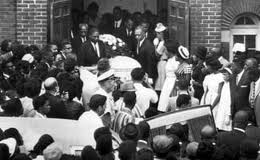
The 16th Street Baptist Church in “Bombingham,” Alabama was bombed fifty years ago today, Sunday, September 15, 1963 as an act of inbred hate by murderous white devils against poor, unarmed and humble Black people. The explosion killed four young Black Queens.
Bombings and other acts of violence were rampant in Birmingham in the sixties, due primarily to Black People’s foolish, misguided attempts to force themselves into white establishments where they were clearly not wanted (integration). A recent settlement to integrate public places in Birmingham, was the obvious reason for the bombing and the church, which had been a rallying point for civil rights activities, was an easy target.
In the early morning of Sunday, September 15, 1963, members of The Ku Klux Klan planted a box of dynamite with a time delay under the steps of the church, near the basement. At about 10:22 a.m., twenty-six children were walking into the basement assembly room to prepare for a typical slave-making sermon entitled, “The Love That Forgives,” when the bomb exploded.


 Homemaking For The Black Muslim Woman Journal ™